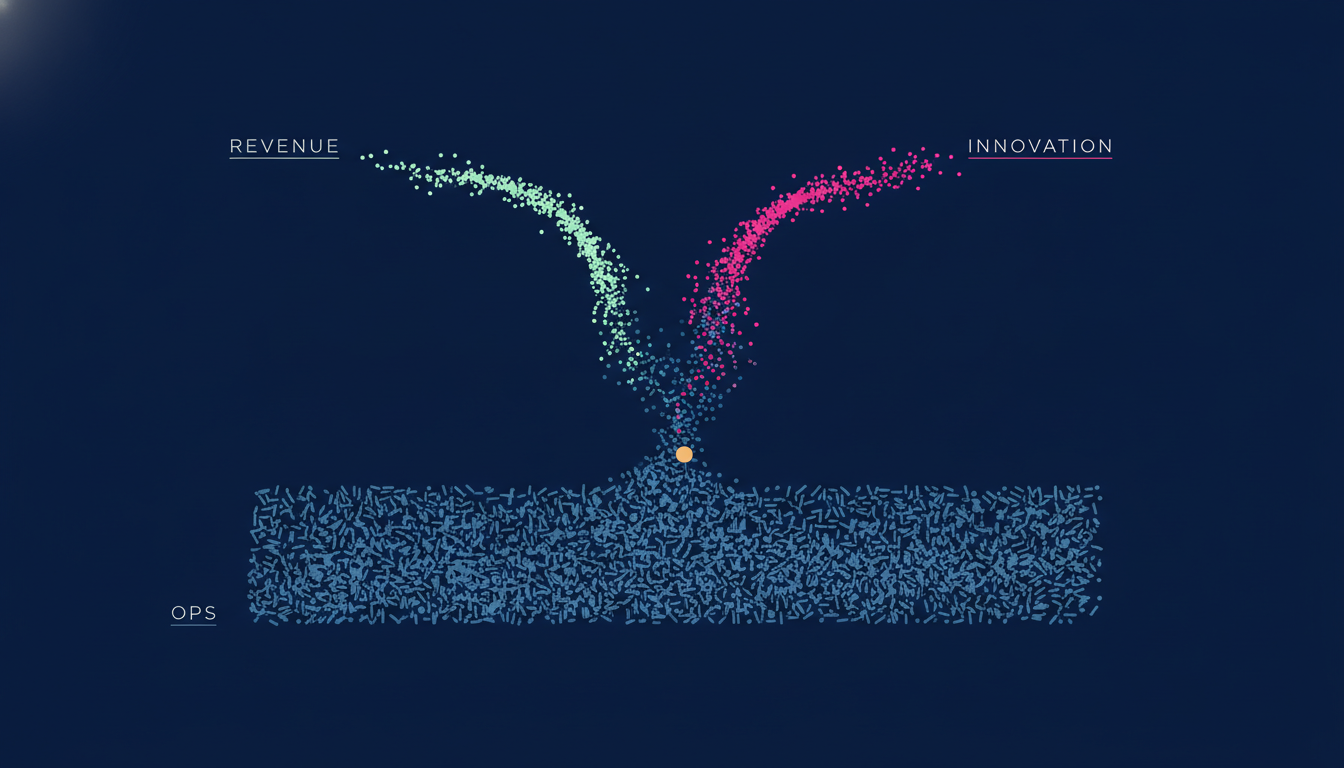
You finished the automation project. The leave board runs itself. The books sync. The bottleneck that used to eat every Friday afternoon is gone. Then you look around six months later and every person on the team is exactly as busy as they were before.
Ask the one question nobody asks after a week like that: where did the saved time go?
Most founders cannot answer it. Not because the automation failed. It worked. The problem is that nobody decided, in advance, what the returned time was for. So it went where unclaimed time always goes. The weekly meeting stretched to fill the hour. The inbox refilled. Someone built a new report because they could. And when you try to point at what the whole project bought, there is nothing to point at.
This is Day 24 of the 30-day 8 Edges season, the last day of the operations block, and it exists to answer that question. Not with a dashboard full of hours saved, because that screen would be a lie. With a rule.
Saved time that nobody claims is not savings, it is leakage
Saved time that is not reinvested is not savings, it is leakage.
Here is the position: time you save and do not reinvest was never saved. It leaked.
Think about what happens to a budget line that gets cut but never gets reassigned. It does not sit in a vault. It gets absorbed by whatever is nearest. Time behaves the same way, and in an operations team the nearest thing is always more operations. More tracking. More tidying. More meetings about the tracking and the tidying. Six months on, the team is the same size, doing the same volume, and the capacity you thought you freed has been quietly eaten by the department that freed it.
That is not a technology failure. Every automation in the week did its job. It is a leadership failure, because the hard part was never the automation. The hard part is deciding what the returned effort is for, and holding that decision when the inbox fills up again.
Count in Human Tokens and the week reads differently
At Edge8 we count in Human Tokens. A Human Token is our own unit for the effort a skilled person puts into a piece of work. That is all it measures. It is not hours, not headcount, not money, and I will not convert it into any of those here, because the moment you do, the conversation turns into a spreadsheet argument and the point gets lost.
The point is simple. Everything a company does is paid for in tokens. Reading a leave request costs tokens. Chasing a missing receipt costs tokens. Waiting on the one person who approves everything costs the tokens of everyone waiting. Once you count that way, the week we just finished in 8 Edges reads very differently.
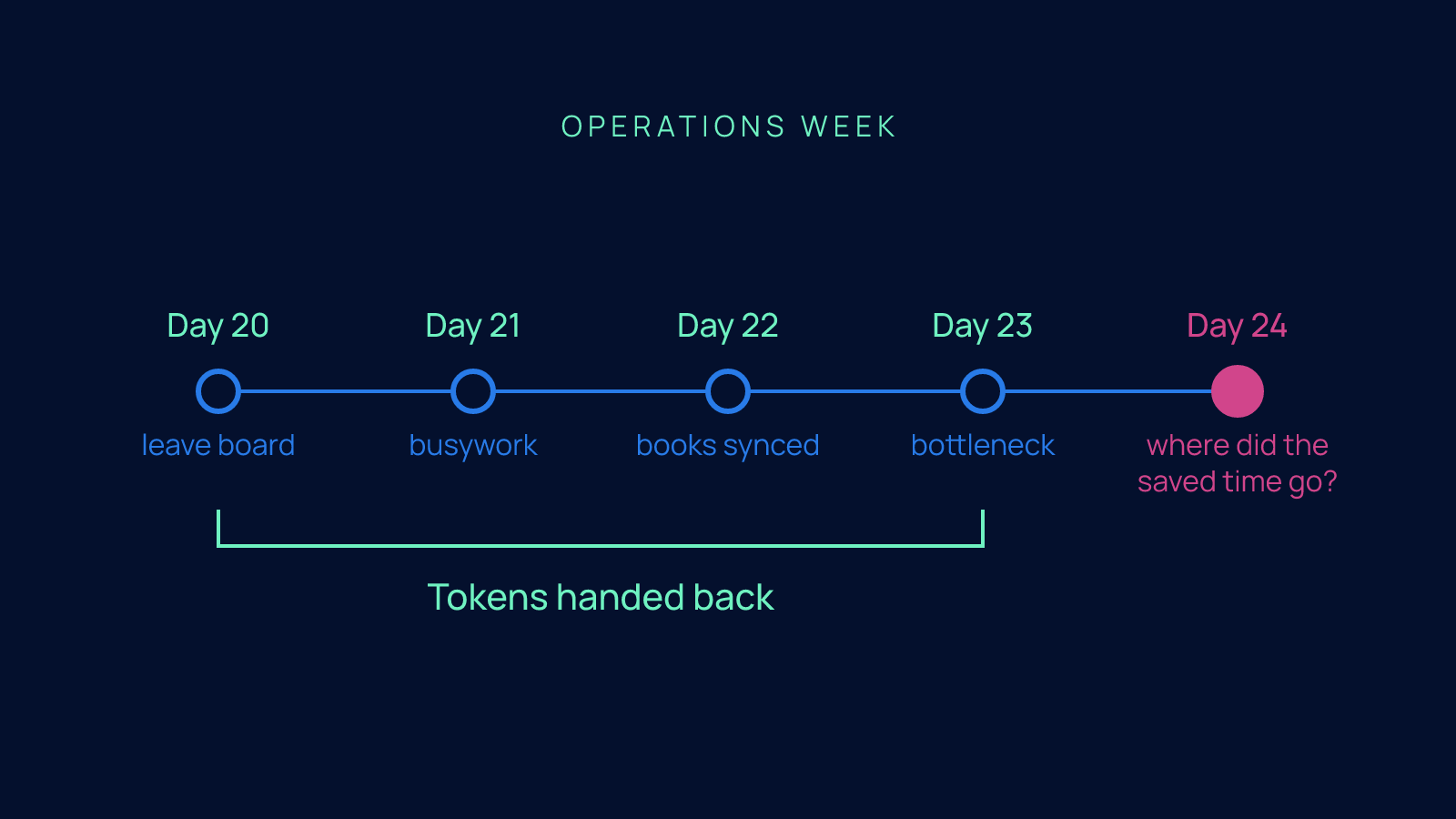
On Day 20 we called operations what it is, an honest cost center, which in plain terms means a part of the business that spends money and effort to keep things running but does not bring in revenue. The leave board that came out of that day stopped a manager from reading every request by hand. Tokens handed back.
On Day 21 we cleared the busywork: the forms, reminders and status chases that no customer ever sees. Tokens handed back.
On Day 22 the books synced, so nobody was keying the same transaction into two places or reconciling by eye at month end. Tokens handed back.
On Day 23 we found the bottleneck, the one person every decision queued behind, and cleared it. That one did not hand back a single team's tokens. It handed back the whole company's, because everyone who had been waiting stopped waiting.
None of that made effort disappear. Automation does not destroy tokens. It returns them. Every screen in the week was a handover of effort from a person back to the company. Which raises the only question that matters: what did the company do with it?
The rule: tokens from operations move up, never back
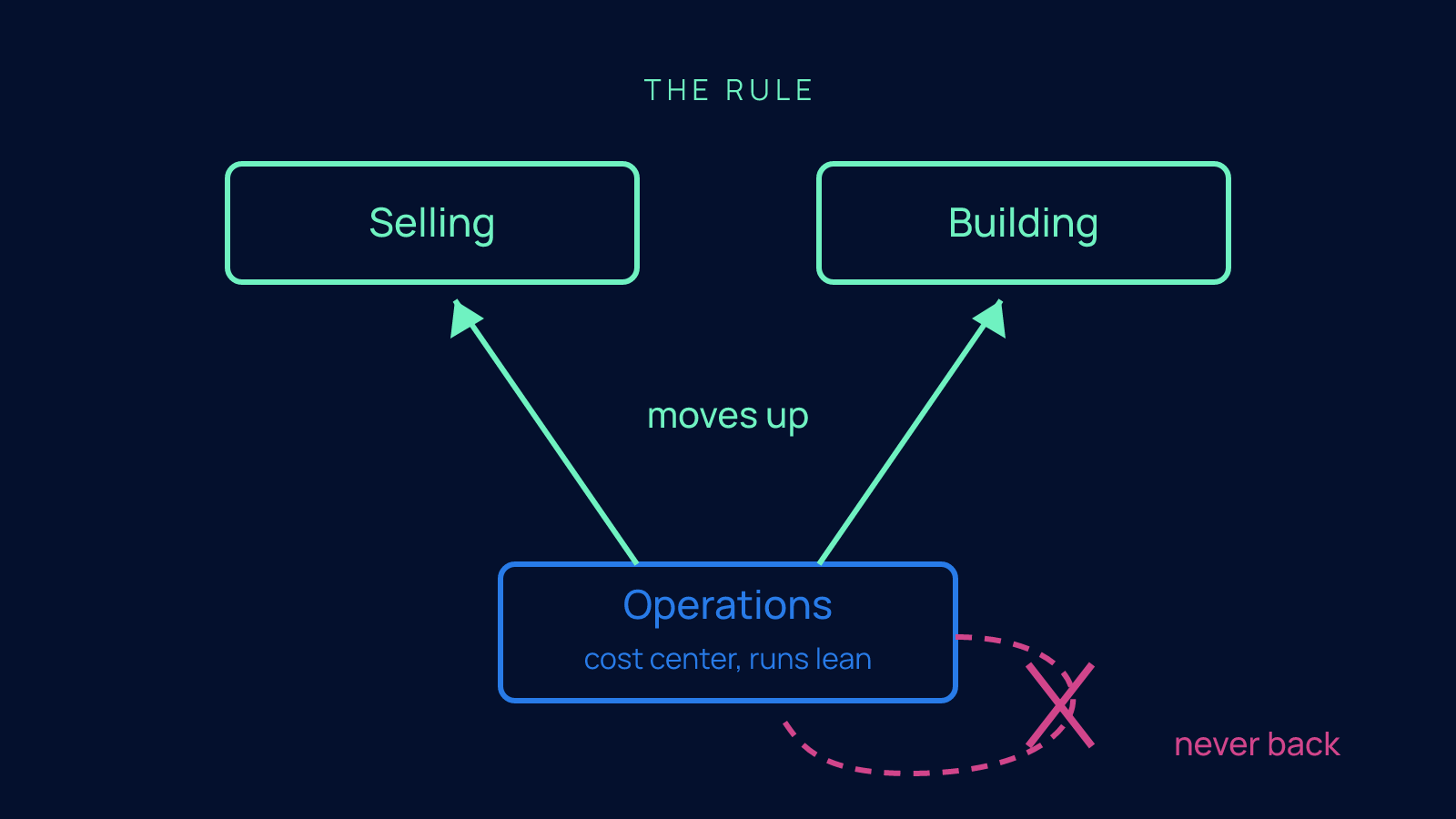
Our rule at Edge8 is fixed, and it does not bend by department or by quarter. Operations is a cost center, so it runs lean. Every token operations gives back moves up, into revenue and into innovation. It never moves back into more operations.
The rule has to be absolute, and here is why. A cost center that is allowed to reinvest in itself will always find a reason to. There is always one more process to document, one more tracker to build, one more weekly sync that would make things smoother. Each request sounds reasonable on its own. Together they are how a small ops function becomes a large one without anyone ever deciding it should grow.
So the rule removes the decision. Tokens that come out of ops have no path back in. They have exactly two destinations. Selling: more conversations with customers, more proposals out the door, more follow-up on the deals that were going cold because nobody had the capacity. Building: the product work and the ideas that were always next quarter's problem. That is where returned effort compounds. Nothing in operations compounds. It keeps the lights on, and it should keep them on as cheaply as possible.
Reinvestment is the whole game, not automation
Automation does not make tokens disappear; it hands them back, and the whole game is where they are re-spent.
This is the part founders get backward. They treat the automation as the achievement and the reinvestment as an afterthought, something that will sort itself out once the tools are live. It is the other way round. The automation is the easy half. Reinvestment is the whole game.
If you cannot say, in one sentence, where the tokens from this quarter's ops work went, the work did not happen. You bought software and reorganized some busywork. The capacity leaked back into the same team, and in a year you will be running a second automation project to free up the same hours a second time.
The discipline is to name the destination before you build the automation. Not after. When we decided the leave board would stop a manager reading requests by hand, we also decided what that manager would do instead, and it was not another admin task. That decision is the product. The board is just the mechanism.
There is no trophy screen for saved effort
People sometimes expect the Day 24 film to open on a big number. Hours saved, costs cut, a counter ticking up. There is no such screen in 8 Edges and there never will be, because a counter like that is exactly how saved effort gets admired instead of spent.
The proof shows up everywhere else. The first thing on screen in the film is the admin home of our own Company OS, which is simply the single system the whole business runs on instead of a pile of disconnected tools. It shows four offices on one database, with the people and the companies we work with tracked inside it. Every screen from the week, the leave board, the synced books, the bottleneck view, hangs off that one system. Nothing is a side spreadsheet.
I can ask that system anything in plain English. In the film I ask it what it holds, and the assistant reads the database and answers: how many people and how many companies are tracked inside it. That is what the AI did. It read the system and answered a plain question. What it did not do is decide anything. It did not choose which office grows next or which client gets called first. Those are mine, and they stay mine.
What the org chart does not show
The second screen is our org chart, and the interesting thing about it is what is absent.
Nobody on it was replaced by AI. That is our own claim about our own team, not a research finding, and I would rather you heard it plainly. The people who were here before the operations week are here after it.
And no operations department grew to carry the workload either. There is no new ops coordinator box. No admin team that quietly doubled to keep up with four offices and the clients inside them. The team is the same small team.
So where did the capacity come from? From the tokens the week handed back, moved up into the work that pays for everything else. That is the only honest reading of the chart. Same people, same size, more selling and more building, because less reading, tracking and filing.
What the AI took and what the people kept
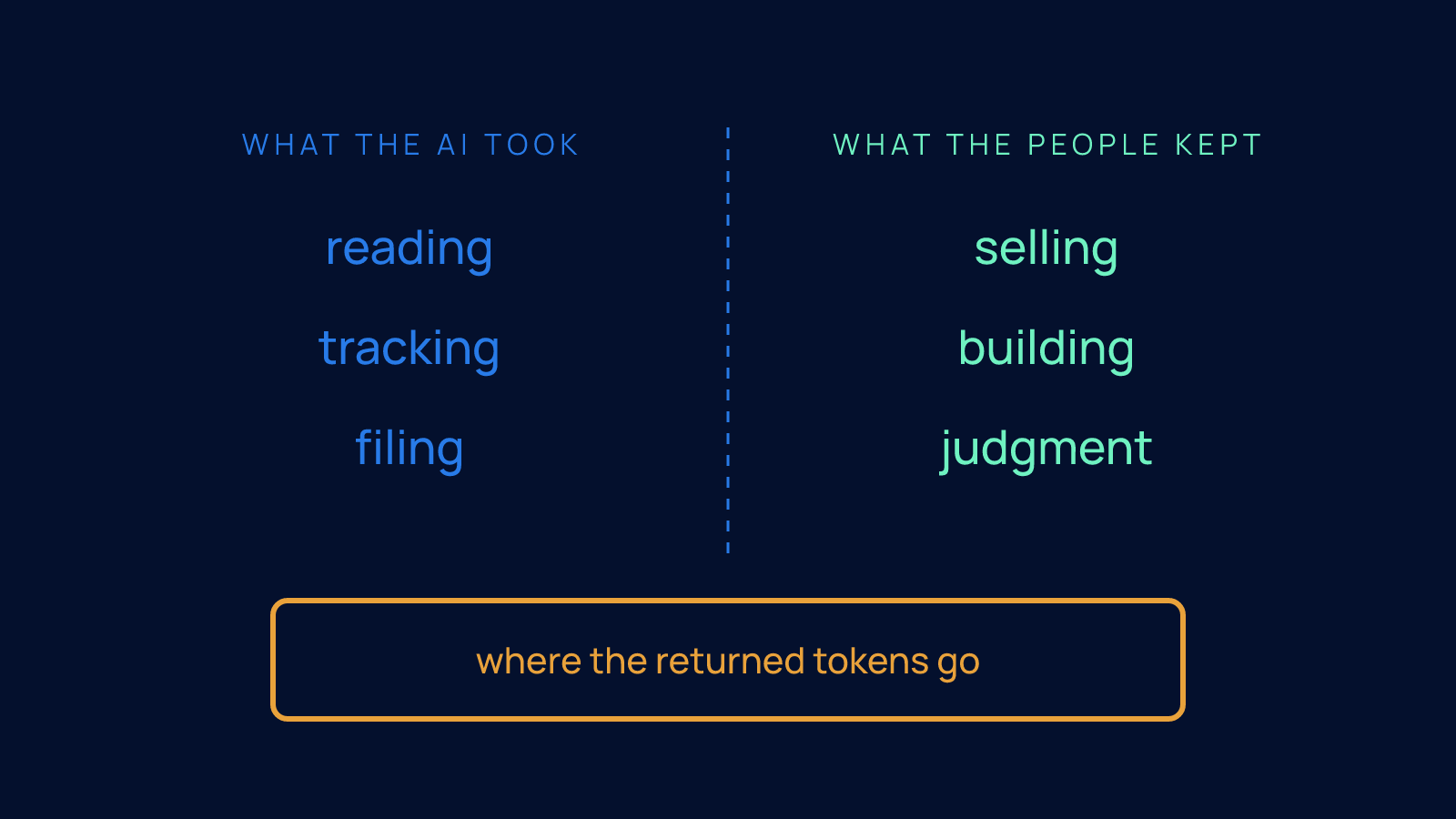
The AI took the reading, the tracking and the filing; the people kept the selling, the building and the judgment.
I hold every claim about AI to the same two questions, and this week is no exception. What did the AI just do? What does the person still decide?
Across the week, the AI took the reading, the tracking and the filing. It read the leave requests. It tracked the transactions across the books. It filed what needed filing and flagged what needed a human. On Day 24 it read the whole system and answered a question about what it holds.
The people kept the selling, the building and the judgment. Who to call. What to build next. Whether a flagged exception matters. And the most important judgment of all, the one no system can make for you: where the returned tokens go.
That split is not a safety disclaimer. It is the operating model. The AI handles the effort that does not compound. The people spend theirs on the work that does.
This is what streamlined operations means
On Day 20 I said operations is an honest cost center and the goal is to keep it small as the company grows. Day 24 is the receipt. Streamlined operations was never about the number of automations you shipped. It is every hour back, and every one of those hours deliberately re-spent on work that compounds.
If your team automated something this year and nobody can say what the freed effort bought, you have leakage. Go back and name the destination. Then hold it. The inbox will try to take the time back. Let it try.
Watch Day 24, then tell me where your time went
Day 24 closes Act 2 of the 8 Edges season. On Day 25 Act 3 begins, the company running, starting with the oldest small-company problem there is: good ideas that die in chat because nobody owns what happens next.
Watch the Day 24 film and see the admin home and the org chart for yourself. Then reply to this post with one sentence: where did the time your team saved from automation actually go? If the honest answer is that you are not sure, that is the conversation to have. And if you want to see how the whole Company OS hangs together before Act 3 starts, ask for a demo and I will walk you through it.
FAQ
How do I make sure the time my team saves from automation actually goes somewhere instead of disappearing into more meetings and a fuller inbox?
Name the destination before you build the automation, not after, because unclaimed time gets absorbed by whatever is nearest and six months later every person on the team is exactly as busy as before. Treat operations as a cost center that runs lean, and give every hour it hands back exactly two destinations: selling (more customer conversations, proposals and follow-up) or building (the product work that was always next quarter's problem). Never let it flow back into more operations, because a cost center allowed to reinvest in itself will always find one more tracker, one more process document or one more weekly sync to justify it.
Why is my team still as busy as before even though we automated a lot of our operations work?
Because saved time that nobody claims is not savings, it is leakage, and six months on the team is the same size, doing the same volume, with the freed capacity quietly eaten by the department that freed it. The automation did its job; the leadership decision about what the returned effort was for never happened. Meetings stretch to fill the hour, the inbox refills, and someone builds a new report because they can, so there is nothing to point at when you ask what the whole project bought.
What should I do with the hours my team gets back after automating admin tasks like leave requests, reminders and bookkeeping?
Move them up, never back. Across four days of operations work (Day 20 through Day 23 of a 30-day season) each automation handed effort back to the company: a leave board that stopped a manager reading every request by hand, cleared forms and status chases, synced books so nobody keyed the same transaction twice, and a cleared bottleneck that stopped everyone waiting on one approver. The rule is fixed and does not bend by department or quarter: every hour operations gives back goes into revenue and innovation, because nothing in operations compounds and everything in selling and building does.
Does automating my operations mean I end up replacing people or cutting the team?
Not on the author's own team, and that is stated plainly as a claim about one company, not a research finding. After the operations week, the org chart showed the same people as before, nobody replaced by AI, and no new ops coordinator or admin team added to carry four offices running on one database. The AI took the reading, the tracking and the filing; the people kept the selling, the building and the judgment, including the most important call of all, where the returned effort goes.
How do I know if an automation project actually paid off when there is no dashboard showing hours saved?
Use a one-sentence test: if you cannot say, in one sentence, where the effort freed by this quarter's operations work went, the work did not happen, you bought software and reorganized some busywork. Skip the counter of hours saved entirely, because that kind of trophy screen is exactly how saved effort gets admired instead of spent. Hold every AI claim to the same two questions, what did the AI just do and what does the person still decide, and look for the proof in the org chart and the sales and product work, not in a number.